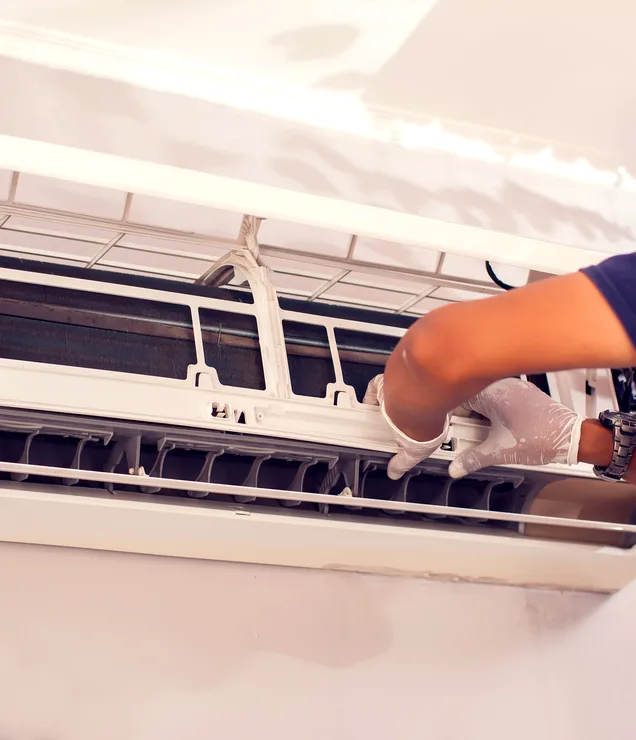
Mini-Split Repair in Scottsbluff, NE
When your ductless system stops cooling or heating, you’re losing both comfort and energy efficiency — and the problem is never what you think it is.
At Gering Valley Plumbing & Heating, we specialize in mini-split diagnostics because these systems are more complex than central AC. Refrigerant charge sensitivity, inverter-compressor control boards, and precise indoor-outdoor unit communication mean that a problem in one place creates symptoms somewhere else. Our technicians are factory-certified on Mitsubishi Electric, Airease, and Allied Air systems — we know exactly where failures hide and what tests reveal the real issue. We offer prompt, same-day repair across Gering, Scottsbluff, Sidney, Kimball, Alliance, and Torrington, with a guaranteed rapid call-back when you reach out.
Your ductless system didn’t fail randomly. We’ll find what happened, show you why, and fix it right. Schedule your mini-split repair diagnosis today or join our maintenance club to prevent future breakdowns.
Request Your Mini-Split Repair Diagnosis
Your Mini-Split Needs Expert Diagnostics
We’ll visit your home, test your system’s refrigerant charge, electrical controls, and sensor communication, show you what’s wrong and why, and present repair options with upfront pricing. No hidden fees. No guesses.
How Our Ductless System Diagnostics Set Us Apart
Factory-Certified Inverter & Control Board Expertise
Mini-splits use variable-speed inverter compressors that adjust output dozens of times per minute — far more complex than traditional fixed-speed motors. A problem on the control board, communication line, or sensor can cause cooling loss, erratic cycling, or complete shutdown. We’re factory-trained on the communication protocols between indoor and outdoor units, can read diagnostic codes from manufacturer software, and understand why a simple sensor failure creates a cascade of symptoms. This deep diagnostic capability shortens diagnosis time and prevents misdiagnosis that leads to expensive parts replacement.
Mitsubishi Diamond Dealer Precision Troubleshooting
As a Mitsubishi Electric Diamond Dealer, we have access to factory service bulletins, OEM parts lists, and technical support directly from the manufacturer. When a Mitsubishi unit exhibits unusual short-cycling or temperature differential problems, we recognize the known failure patterns immediately. We’ve installed and repaired hundreds of Mitsubishi systems, so we understand the design intent and can spot when a particular component is trending toward failure.
Fast Response Across the Panhandle
A broken mini-split in July isn’t a minor inconvenience — it’s a serious comfort problem in the panhandle. We guarantee a rapid call-back: when you reach out, we return your call quickly, prioritize your situation, and send a technician with diagnostic equipment and common repair parts. Most urgent failures are resolved same-day; complex cases are scheduled for next-business-day completion without you losing a full week of comfort.
Expert Refrigerant Charge Verification & Recovery
Mini-splits operate on precise refrigerant charge — overfill or underfill reduces efficiency and stresses the compressor. We measure charge using superheat and subcooling calculations (not guesswork), locate any leaks using electronic detection, recover old refrigerant responsibly per EPA regulations, and recharge to the exact amount specified on the equipment nameplate. Proper charge is the foundation of every repair.
Complete Repair Workmanship Guarantee
We stand behind every repair we perform. Parts we install are covered if they fail prematurely, and our labor comes with a service warranty. If we miss something or a related issue surfaces after repair, we’ll return and fix it right. This guarantee means you’re not paying for guesses — you’re paying for confidence and accountability.
Honest Assessment: Repair vs. Replacement Path
An older ductless unit with a compressor failure might cost as much to repair as a new system provides in remaining efficiency gains. We’ll walk you through the repair cost, remaining lifespan, and upgrade options so you decide based on real numbers, not sales pressure. If replacement is the better investment, we’ll discuss financing and how a new system improves comfort and efficiency.
Warning Signs Your Mini-Split Needs Professional Repair
No Cooling or Heating Despite the Indoor Unit Responding
The indoor unit displays the correct temperature on the remote control or wall-mounted thermostat, the fan runs normally, but no conditioned air comes from the louvers. This often signals: a refrigerant charge problem (leak or overfill), an expansion valve stuck open or closed, a sensor malfunction, or a compressor failure. We measure the temperature differential across the indoor coil, check refrigerant pressure at both service ports, and test control board communication. Each test isolates whether the problem is mechanical or electrical.
Refrigerant Leak — Oil Residue or Hissing from the Outdoor Unit
A slow refrigerant leak is one of the most common mini-split failures because these systems operate under high pressure and the refrigerant lines are routed through external walls. You might notice: oily residue on the copper lines where they pass through the wall, a faint hissing from the outdoor unit, ice buildup on the indoor coil, or the system struggling to cool despite running constantly. Refrigerant doesn’t “run out” — it escapes through a pinhole crack, bad flare connection, or failed solder joint. Our electronic leak detector pinpoints the source, we repair it, recover the old refrigerant responsibly, and recharge to manufacturer specs.
Short-Cycling or Constant Restarts
The outdoor unit runs for 2–10 seconds, shuts down, waits a minute, then restarts. This short-cycling behavior usually signals: a refrigerant overcharge (the compressor shuts down because pressure is too high), a low-charge condition causing pressure drop, a thermistor sensor malfunction, or a control board issue misreading temperature. We measure charge using superheat and subcooling calculations, verify sensor readings against outdoor temperature, and test the control board’s response to sensor inputs. Short-cycling destroys compressor reliability because the motor continuously struggles with rapid on-off cycles.
Loud Compressor Noise or Vibration Increasing Over Time
Early mini-split compressors run nearly silent — if noise is increasing, the motor bearings are wearing or internal parts are degrading. A rumbling or grinding sound suggests the scroll compressor is losing clearance or debris has lodged inside. Vibration transmission through refrigerant lines or mounting brackets often signals loose connections or failed isolation mounts. We listen to the noise pattern, measure vibration, and determine whether the source is the compressor itself (requiring replacement) or a mounting or connection issue (repairable). Early diagnosis prevents catastrophic failure.
Inconsistent Cooling Between Multiple Indoor Units
In a multi-zone system with 2–5 indoor units, one or more zones suddenly lose cooling while others work fine. This usually signals: a zone control valve failure (if your system uses them), a blocked refrigerant line, an unequal refrigerant distribution, or an individual indoor fan failure. We verify that all units are communicating with the outdoor unit, measure the refrigerant temperature at each branch connection, and test each indoor fan motor. Multi-zone diagnostics require manufacturer software or specialized equipment that most general HVAC technicians don’t have.
Frost or Ice Buildup on the Outdoor Unit
Visible ice or frost on the outdoor coil during cooling mode indicates the system is running at abnormally low refrigerant pressure, usually from an undercharge or expansion valve malfunction. The low pressure causes the coil temperature to drop below freezing, even in warm outdoor air. The system’s defrost cycle can’t keep up and ice accumulates. This is a serious failure because the ice blocks airflow, further reducing pressure, which accelerates compressor damage. We measure refrigerant pressure, verify the defrost thermostat, and confirm whether the problem is an underfilled system, a slow leak, or a stuck expansion valve.







Our Mini-Split Repair Diagnostic Process
When our technician arrives, we start by understanding your experience: When did it stop cooling or heating? What sounds did you hear before the failure? Has the system been serviced recently? We observe both the indoor and outdoor units, feel the refrigerant lines to check temperature, and check for error codes on the remote control or wall thermostat. This real-world context guides our diagnostic approach.
- Note the system model and serial number from the nameplate on the outdoor unit
- Interview about the failure timeline: Did it happen gradually or suddenly? Any unusual sounds before failure?
- Check the remote control for error codes — Mitsubishi, Airease, and Allied Air systems display diagnostic codes
- Observe: Is the outdoor unit’s fan running? Can you hear the compressor humming? Any refrigerant line vibration?
- Feel the refrigerant lines — the suction line should be cold; the liquid line should be warm during cooling mode
- Check the indoor unit: Is air flowing from the louvers? Is the filter dirty?
- Look for visible damage, ice, corrosion, or disconnected wires on the outdoor unit
Refrigerant charge is the most critical parameter in mini-split operation. Too little and the system works harder while cooling less. Too much and the compressor shuts down on high-pressure safety switches or runs inefficiently. We measure refrigerant pressure on both the high and low sides, calculate superheat and subcooling, and compare against manufacturer specifications for the current outdoor temperature.
- Measure outdoor temperature — this determines what “correct” pressure should be
- Attach refrigerant gauges to the service ports on the outdoor unit
- Read high-side pressure (after the compressor) and low-side pressure (before the compressor)
- Calculate superheat (low-side pressure converted to saturation temperature, then compared to actual temperature) — indicates charge accuracy
- Calculate subcooling (high-side saturation temperature minus liquid line temperature) — confirms charge amount
- If charge is low, use electronic leak detection to locate the leak source
- Document all measurements and compare against the manufacturer’s pressure chart for that model and outdoor temperature
- If charge is high, identify why (overfill during previous service, or refrigerant reclamation problem)
The indoor and outdoor units communicate constantly. The outdoor unit’s control board receives signals from temperature sensors (outdoor air, refrigerant) and from the indoor unit’s thermostat or remote control, then adjusts the compressor inverter output. If this communication is interrupted, the system shuts down for safety. We test sensor resistance values, verify the communication line is intact and unbroken, and read diagnostic codes directly from the control board using manufacturer software if available.
- Measure the resistance of the thermistor sensors (outdoor air sensor, liquid line sensor) against published specifications — a bad sensor reads out of range
- Visually trace the communication wire between the indoor and outdoor units for damage, pinching, or disconnection
- Test the communication wire for continuity and short circuits using a multimeter
- If the system has a diagnostic display, read any fault codes — these tell us exactly what the control board detected
- Check that the control board is receiving 24V power
- Verify that the remote control or wall thermostat is sending commands — test with a different remote if available
The compressor won’t start if power isn’t reaching it or the control board isn’t commanding it. We measure voltage at the disconnect, test the capacitor (if the unit has one), verify the contactor is closing, and check that power is reaching the compressor terminals. On inverter-driven units, we also verify that the control board is sending the startup signal.
- Measure voltage at the main electrical disconnect — should match the nameplate (usually 208–240V)
- Test the run capacitor against the nameplate rating — a failed capacitor prevents the compressor from starting
- Measure voltage at the compressor terminals — should be present when the thermostat calls for heating or cooling
- For inverter units, verify the control board is sending the command signal to the inverter module
- Check for tripped circuit breakers or blown fuses on the home’s main panel or at the outdoor disconnect
Poor airflow reduces system efficiency and can cause the evaporator coil to freeze. We check the blower wheels on both indoor and outdoor units for dirt or damage, inspect filters, and look for obstructions. We also visually inspect the evaporator coil (indoor) and condenser coil (outdoor) for ice, dirt, or corrosion.
- Check the indoor unit’s air filter for blockage — a clogged filter starves the system
- Inspect the indoor blower wheel for dirt, corrosion, or damage
- Verify air is flowing freely from the indoor unit’s louvers
- Inspect the outdoor condenser coil for dirt, algae, or ice buildup
- Check the outdoor unit’s fan motor — is it running freely or making noise?
- Look for leaves, debris, or vegetation blocking the outdoor unit’s airflow
- If ice is visible on the evaporator coil, check if the defrost thermostat is cycling the system into defrost mode
Once testing is complete, we explain what we found: Is it a refrigerant leak? A sensor failure? A compressor issue? We show you the test data, explain what it means in plain language, present the repair cost, and discuss timeline. For simple repairs (sensor replacement, capacitor failure), we often complete the work same-day. For complex failures (compressor, control board), we’ll order the part and schedule a second visit, or discuss whether replacement is the better option.
- Present the diagnostic findings in writing with all test measurements
- Explain the root cause in plain language — avoid technical jargon unless you request it
- Provide a written repair estimate: parts, labor, warranty coverage, and timeline
- Discuss whether the repair can be completed same-day or requires a return visit
- If repair cost approaches 50% of a replacement system price, discuss upgrade options and financing
- Answer all questions before starting work
- Get your written approval before beginning any repair
We perform the repair per manufacturer specifications, using OEM parts or high-quality equivalents. After repair, we run the full diagnostic protocol again to confirm the system operates correctly, measure all pressures and temperatures, and run the system through several heating and cooling cycles to verify stable operation.
- Recover any refrigerant before opening the system (EPA-compliant procedure)
- Replace the failed component per manufacturer service bulletin specifications
- Perform a pressure test if the sealed system was opened
- Recharge refrigerant to the exact amount using calibrated scales, measured by weight not volume
- Run diagnostic tests again: measure superheat, subcooling, control board response, and sensor values
- Verify the compressor starts cleanly and ramps up smoothly (inverter systems should show gradual speed increase)
- Run the system through heating and cooling cycles for 15–20 minutes to confirm stable, efficient operation
- Document all final measurements and compare to baseline specifications
We leave you with a detailed service report showing what failed, what we repaired, all test results, warranty coverage, and maintenance recommendations to prevent future failures.
- Provide written documentation of the diagnosis, repair, parts used, and all test results
- Explain the warranty: how long the repaired component is covered and what the warranty includes
- Discuss preventive maintenance: annual pre-season tune-ups catch minor issues before they become major repairs
- Explain any temporary operational limitations or special care after the repair
- Provide our direct contact information and recommendations for next-visit maintenance
- Discuss enrollment in our Superhero Maintenance Club to monitor system health year-round
Common Mini-Split Repairs We Handle
Refrigerant Leak Location & Repair
Leaks escape from pinhole cracks, bad flare connections, or corroded copper lines. We use electronic leak detection to locate the source, assess whether repair or component replacement is needed, recover the old refrigerant responsibly, perform a pressure test to verify the repair, and recharge to manufacturer specifications. We’ll show you the cost before proceeding.
Schedule Leak RepairThermistor Sensor Replacement
Temperature sensors on the refrigerant line and outdoor air measure the system’s operating conditions. A failed sensor reads out-of-range values, causing the control board to misinterpret the system’s state and shut down or cycle erratically. Sensor replacement is usually straightforward and affordable. We test the sensor resistance, confirm the diagnosis, and replace with an OEM sensor.
Sensor DiagnosticsInverter Control Board Diagnostics & Repair
The control board manages compressor speed, cycling, and communication. Failures here cause short-cycling, no cooling, or error codes on the remote. We can often identify failing boards, test for specific component failures (capacitors, MOSFETs), and order board replacement. In some cases, board-level repair is possible if a single component has failed.
Control Board ServiceRefrigerant Recharge After Leak Repair
If your system has lost refrigerant, recharge is not simply “topping off.” We recover all remaining refrigerant, evacuate the system to remove air and moisture, and recharge to the exact weight specified on the equipment nameplate using calibrated scales. Proper recharge is critical to efficiency.
Recharge ServiceCompressor Failure Assessment & Replacement
A failed compressor means the system won’t cool or heat. Replacement is major work because the entire sealed system must be opened, flushed, evacuated, and recharged. We’ll assess whether repair is still cost-effective or if a new system is the better investment, discuss financing options, and complete the replacement with full testing and warranty.
Compressor AssessmentCapacitor Replacement
Some mini-split systems use a run capacitor to assist compressor starting. Over time, capacitors degrade — a failed capacitor means the compressor won’t start. We test the capacitor, confirm the failure, and replace with an exact-match unit. This is usually one of the fastest, most affordable repairs.
Capacitor RepairExpansion Valve Diagnostics & Replacement
The expansion valve meters refrigerant flow into the evaporator coil. A stuck-open valve floods the coil; a stuck-closed valve starves it. Both reduce cooling and can damage the compressor. We measure temperature differentials across the coil, compare against manufacturer specifications, and replace if needed.
Expansion Valve ServiceMulti-Zone System Balancing & Repair
In a system with multiple indoor units, unequal refrigerant distribution can cause some zones to cool while others don’t. We test refrigerant temperature at each branch connection, verify communication between all units, and adjust or replace zone control valves if needed.
Multi-Zone DiagnosticsOur Latest Offers & Promotions
Secure Peace of Mind
Free 10-yr Warranty
On Parts & Labor with your New HVAC System Installation
(308) 216-8927Exclusions Apply. Expiration of 12/31/26
Furnace Health Check for
$79
Includes professional system performance evaluation. Limited time special.
(308) 216-8927Exclusions May Apply Due to Mileage.
Expiration of 12/31/26
FREE ESTIMATE &
$100 OFF
Blown-In Attic Insulation
Limited time special.
(308) 216-8927Exclusions May Apply. Expiration of 12/31/26

SuperHero
Maintenance Club
Starting as low as $24.92/mo3 Months
Free
When you sign-up for our monthly maintenance membership
(308) 216-8927Expiration of 12/31/26
Members Only Special
Skip the Service Fee
Not a member of our Superhero Maintenance Club yet? Ask how to join today.
(308) 216-8927Expiration of 12/31/26
Financing Available Through Synchrony
A new HVAC system or major plumbing repair is a significant investment. Gering Valley Plumbing & Heating offers financing options through Synchrony — one of the nation’s leading consumer financing providers — so you can get the work done now and pay over time on terms that work for your budget.
What are the Benefits of Financing?


Synchrony provides trusted home improvement financing with promotional options and flexible plans. With millions of cardholders nationwide, Synchrony makes it easy to invest in your home’s comfort.

Service Finance offers flexible home improvement financing with competitive rates and promotional plans. Get the HVAC, plumbing, or roofing work you need done now — without putting it off.
Break up the cost of your new system into affordable monthly payments that fit your budget.
Choose a repayment plan that works for you, with multiple term lengths available through Synchrony.
Apply in minutes and get a decision fast so your project can move forward without delays.
Pay off your balance early without extra fees. We keep it simple.
Use financing for system replacements, new installations, and other big-ticket services.
Financing options designed to be accessible, with competitive rates for qualified applicants.
Our 10-Year Parts & Labor Warranty Has You Covered
We stand behind our work — and our equipment.
- 10-year parts & labor warranty on qualifying AirEase and Allied Air installations
- No hidden fees or extra charges — included free with your install
- Peace of mind from a team that’s been doing this since 1987
SuperHero
Maintenance Club
Starting as low as $24.92/moBenefits Include
- 15% Discounts on all Repairs under $500
- Members Only Specials
- Annual Inspections
- Prevention of Future Break Downs
- Extended System Lifespan
- Increased Performance & Energy Efficiency
Protect Your System. Prevent Breakdowns. Starting at $24.92/mo.
The Superhero Maintenance Club is Gering Valley Plumbing & Heating’s residential maintenance plan — designed to keep your heating and cooling systems running at peak performance year-round, starting as low as $24.92 per month.
Regular maintenance is the single most effective way to prevent breakdowns, extend system life, and keep your energy bills under control in the Nebraska Panhandle climate. Our technicians know these systems inside and out, and a routine visit can catch small issues before they become expensive repairs.
Hear From Our Customers
Customer Testimonials
All the technicians from Gering Valley Plumbing were very professional and courteous. After replacing my sewer line, they did a great job cleaning things up and making it look as it had before. I would recommend them to anyone.
Alex and Gianna with Gering Valley Plumbing and Heating came to our home and did a yoeman’s job of installing a new heat pump furnace and AC unit.
“I have been extremely pleased with my experience with Gering Valley from my initial appt, to installation, and finally to minor adjustments. Though Tristan has had to come back for minor adjustments, he has had an amazing attitude and seems excited to get our system working perfect. Those answering the phones at the office, we cannot forget them, Michael is great. Answering questions, getting appts done and simply being a great front person for the company. Andrew working the afterhours calls was very helpful with questions I had. Please let everyone that we sure appreciate a great system, more importantly the excellent customer service that’s sets them above anyone in the valley.”
Mini-Split Repair Service Areas
We provide expert ductless system repair across Gering, Scottsbluff, Sidney, Kimball, Alliance, and Torrington with a guaranteed rapid call-back. Call us for prompt service — phone now at (308) 216-8927 or schedule online.
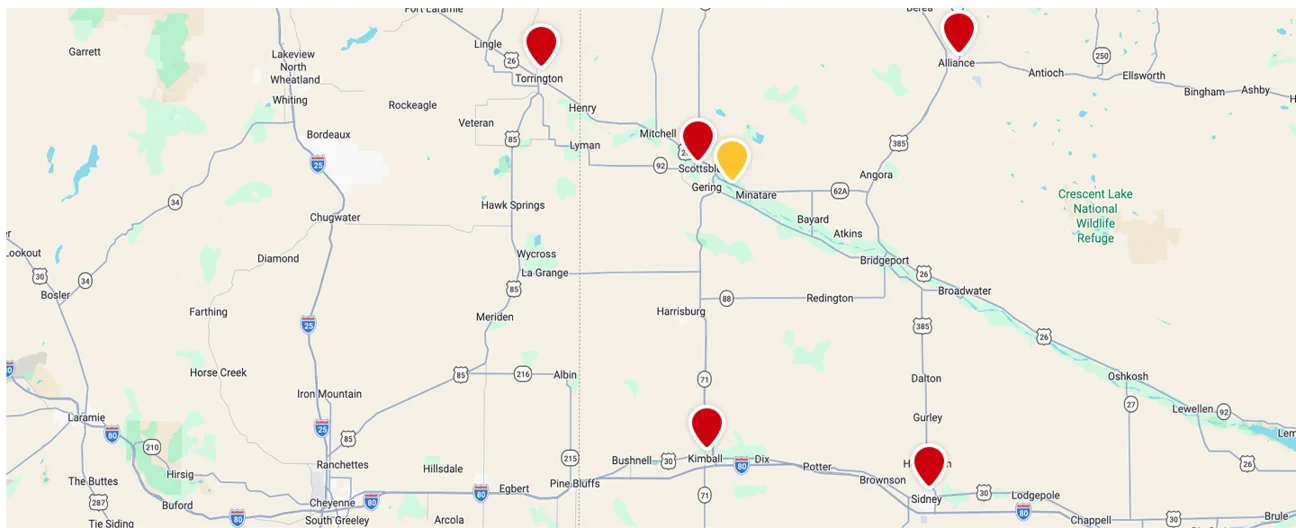
Our Primary Service Cities
Additional Communities We Serve
Don’t See Your Location?
Our service area continues to grow. If your community isn’t listed, give us a call — chances are we can help.
Related Ductless & Comfort Services
Mini-Split System Installation
Ductless system design, sizing, and professional installation with factory-trained precision.
Mini-Split InstallationMini-Split Annual Maintenance
Annual pre-season tune-ups, coil cleaning, and efficiency monitoring to prevent future failures.
Mini-Split MaintenanceCentral AC Repair & Diagnostics
If you’re comparing ductless to central cooling systems, we repair all types with the same diagnostic precision.
Central AC RepairHeat Pump Repair & Service
Another efficient heating and cooling alternative worth exploring for whole-home comfort.
Heat Pump RepairFurnace Repair & Heating Service
If heating is your priority, gas furnace repair and maintenance for dependable Nebraska winters.
Furnace RepairIndoor Air Quality Services
Duct cleaning, UV lights, humidification, and air filtration to complement your cooling system.
Indoor Air QualityCommon Questions About Mini-Split Repair
Your Mini-Split Deserves Expert Repair
Ductless systems are sophisticated and efficient — but they’re also more sensitive to improper diagnosis and repair. Our factory-certified technicians on the Mitsubishi Electric Diamond Dealer team understand inverter compressors, control board communication, and precise refrigerant charging in a way that separates expert repair from guesswork. When your mini-split stops cooling or heating, you need someone who can test what’s actually happening inside the system, explain the root cause, and fix it right.
Contact us today for a prompt, same-day repair diagnosis — we guarantee a rapid call-back, return your call quickly, and prioritize urgent problems. We’ll measure refrigerant pressure, test control board communication, assess electrical systems, and show you exactly what failed and why. Diagnostic visits are thorough and transparent — you’ll get a written estimate before we start any repair work. For simple failures, we complete repairs same-day. For complex issues, we’ll discuss whether repair is cost-effective or whether a new system is the better investment.
Financing is available through Synchrony and Service Finance for larger repairs or system replacement. We also offer our Superhero Maintenance Club — annual pre-season tune-ups and member-exclusive repair discounts. Regular maintenance prevents the unexpected failures that cost the most.
Don’t let a failed ductless system disrupt your comfort. Schedule your mini-split repair diagnosis today, explore maintenance plans to prevent future failures, or learn about financing options.