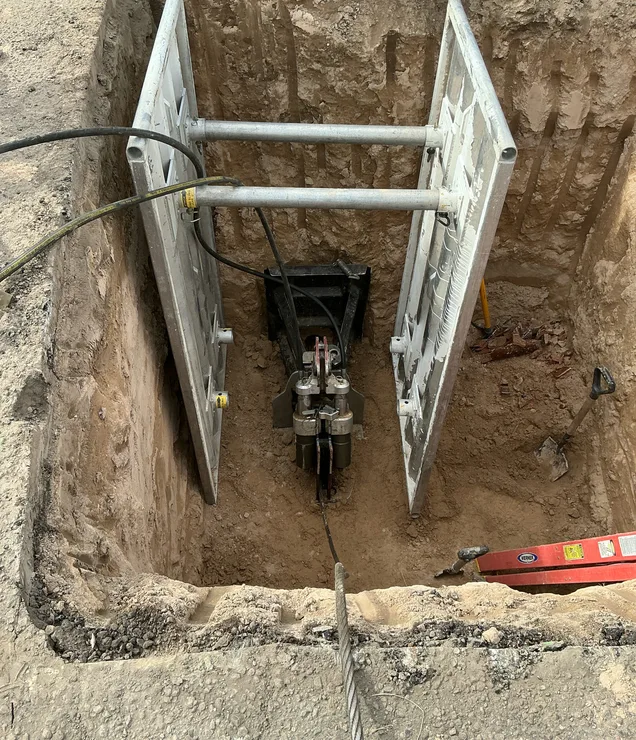
Drain Field Installation & Repair in Scottsbluff & the Panhandle
A drain field (also called a leach field or absorption field) is your septic system’s workhorse — it treats effluent by filtering it through layers of gravel and soil, allowing harmless water to recharge groundwater.
When a drain field fails, you’ll see soggy ground, backed-up fixtures, or sewage seeping to the surface. Gering Valley Plumbing & Heating designs and installs new drain fields to code, and repairs or replaces failing fields across Gering, Scottsbluff, Sidney, Kimball, Alliance, and Torrington. We ensure proper sizing, site preparation, and soil evaluation so your leach field works reliably for decades.
Schedule your drain field inspection today or get a field installation quote.
Drain Field Problems? We Design & Install Solutions
Soggy Yard or Slow Drains? We Find the Problem
A soggy yard or slow-draining fixtures are signs your drain field is struggling. Whether it’s a clogged inlet line, a compacted field, or a system that was never properly sized, we diagnose the problem and recommend the right fix. Call (308) 216-8927 or submit our online form to schedule a site evaluation.
Explore related septic and plumbing services:
Why Property Owners Trust Gering Valley for Drain Field Work
Professional Site Evaluation Ensures Correct Field Placement & Sizing
Not every yard is suitable for a drain field. Soil composition, water table depth, proximity to wells and property lines, and slope all affect where and how large the field must be. We evaluate your site carefully — checking soil percolation rate, seasonal groundwater levels, and local setback regulations — so proper site selection prevents future failures and ensures code compliance.
Drain Field Design Sized for Your Household & Usage
A drain field must be large enough to handle your daily wastewater flow. A field too small becomes saturated, fails to treat effluent properly, and causes backups. We calculate the required field size based on your household’s number of bedrooms, daily water usage, and soil percolation rate — designing a field that matches your actual needs.
Proper Construction Prevents Premature Field Failure
A well-built drain field has distinct layers: a distribution box, perforated drainage pipe buried in gravel trenches, a soil filter layer, and proper slope for drainage. We construct each layer to code — correct pipe placement, gravel size and depth, soil texture and compaction, and outlet slope. Proper construction extends field life to 25–30 years or more.
Accountability for Code Compliance
Drain fields are regulated by county health departments and state codes. We ensure every installation meets Nebraska and Wyoming septic system codes — correct sizing, proper setbacks (50+ feet from wells, often 25+ feet from property lines), correct trench depth, and proper perforated pipe and filter media. We pull permits and coordinate inspections.
Drain Field Installation & Repair Q&A
Install a Drain Field Built to Last
A failing drain field is messy, expensive, and a public health concern. A properly designed and installed field works reliably for decades, treating your wastewater safely and protecting groundwater. If you need a new drain field or suspect your existing field is failing, don’t delay.
We’ll assess soil conditions, design a field sized correctly for your household, handle permitting, and install it to code — all with the accountability you expect from a family business. Whether it’s new installation or urgent replacement, we manage the entire process so you get a system that works.